There are a series of projects focusing on caribou reclamation across the oil sands including the Algar Caribou Study, Landscape Ecological Assessment & Planning (LEAP) project, Regional Industry Caribou Collaboration (RICC), ABMI Caribou Reclamation Research, and the Linear Deactivation Project (LiDea).
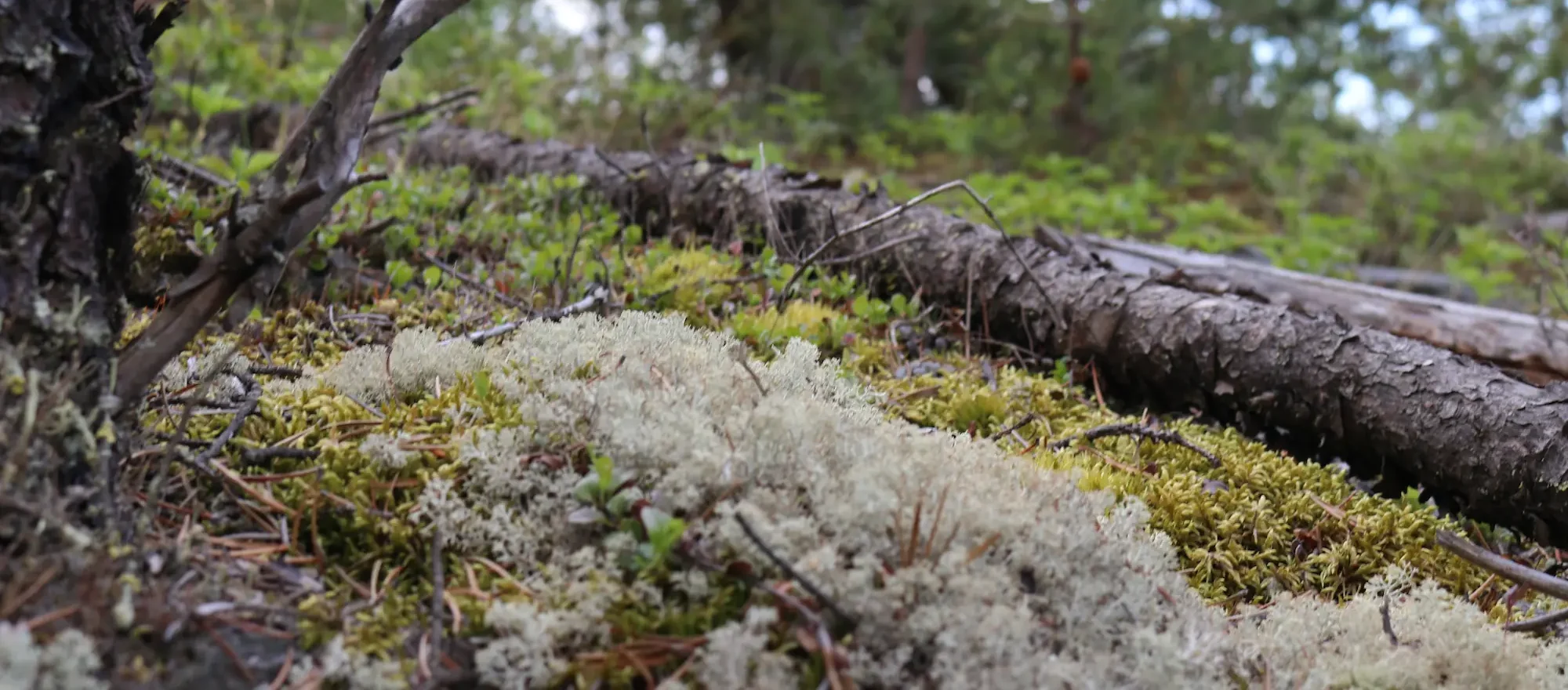
The Algar Caribou study investigated winter habitat use, diet, and reclamation innovations in the Algar range. In the Algar (and nearby Egg-Pony Range), researchers found that lichen, a key winter food source, was relatively rare in the landscape, with the greatest abundance occurring in ecosystems burned 50 to 80 years ago. Over half of caribou winter diets consisted of terrestrial and arboreal lichens, and higher lichen consumption was linked to improved nutritional condition. Caribou selected lichen-rich sites that were farther from winter roads, and physiological indicators suggested that accessing lichen near roads was stressful. The study recommended conserving lichen-rich habitats, conducting further research, and testing methods to restore these critical areas. In parallel, reclamation innovations in the Algar region advanced caribou habitat restoration, including integrating Landscape Ecological Assessment & Planning (LEAP), navigating government approval processes, and employing construction/rig matting when accessing wet areas, using various mounding techniques (Leap Frog, Bar mounds, flow pot).
To learn more:
Despite many organizations carrying out restoration activities in caribou habitat, the Regional Industry Caribou Collaboration (RICC), along with COSIA and Alberta Innovates, identified a lack of current state-of-knowledge reports and collaborated to synthesize these learnings and identify opportunities to reduce costs and improve effectiveness of caribou habitat restoration.
Opportunities to reduce costs include:
1) Re-establish vegetation to sufficient densities on linear features to reduce wolf movement
2) Prioritize restoration efforts where the key targets are going to be achieved
3) Restricting restoration activities to winter is a major constraint and uncertainty
4) Create more time and space for planning
5) Train operators
6) Be aware that investing in new equipment is expensive and high-risk
7) Explore innovations for creating microsites
8) Use drones and UAVs in operations
The current state of knowledge recommends:
Planning: Restoration planning should prioritize re-establishing dense vegetation to limit predator movement, integrate multiple disturbance types for caribou recovery, leverage new technologies for flexible operations, and incorporate advanced regeneration to improve efficiency.
Implementation: Success depends on skilled operators, flexible yet well-informed planning, sufficient treatment intensity (e.g., dense planting and use of barriers), and continued testing of innovative tools and techniques, including effective winter and upland restoration methods.
Monitoring: Monitoring should capitalize on advances in remote sensing and UAV technologies to track vegetation recovery efficiently, reduce ground surveys, and continue improving species-level detection for more precise assessment of restoration outcomes.
Many large-scale projects have informed our understanding of caribou and the restoration of their habitat.
To better utilise reclamation resources, the Alberta Biodiversity Monitoring Institute (ABMI) developed a zonation method to prioritize townships for restoration of linear features across five caribou ranges (Red Earth, Richardson, West Side Athabasca River, East Side Athabasca River, and Cold Lake). Each township’s priority level was modelled on the potential increase of undisturbed caribou habitat that could be achieved through linear feature restoration, accounting for restoration cost and potential for future resource development.
To learn more:
Access the report
Prioritizing Zones for Caribou Habitat Restoration in the Canada’s Oil Sands Innovation Alliance (COSIA) Area Version 4.0
View the infographic
The Linear Deactivation Project (LiDea), led by Cenovus, is designed to accelerate the recovery of linear disturbances by restoring them to the structure and function of the surrounding forest. Using silvicultural treatments including site preparation, mounding and ripping, planting, and stand modification, they aimed to increase conifer growth, reduce line visibility and accessibility for caribou predators, and restore species distributions. They found that mounding and ripping enhanced site regeneration, producing higher stem densities than both untreated lines and undisturbed forest stands, although effectiveness varied across sites.
One technological development described in this project was the use of amphibious equipment, which extended the time window for restoration, but has a slow transit speed and required the transport of operators and fuel.
To learn more:
Presentation on Caribou Habitat Restoration Caribou Conservation: Restoring Trees on Seismic Lines in Alberta, Canada
A full summary and roadmap of Linear Feature Restoration in Caribou Habitat is available here.